
Financial Abuse Safety Planning
📖 Table of Contents
- What Is Financial Abuse and Why It Matters
- Steps to Build a Financial Abuse Safety Plan
- Legal Protections and Financial Tools to Use
- Building a Support Network for Financial Safety
- Saving and Investing While in an Abusive Relationship
- After Leaving: Rebuilding Your Financial Life
- Long-Term Strategies for Financial Independence
- Make It Your Way
- Frequently Asked Questions
I remember the day I realized I had no idea how to protect my finances from abuse — it was during a conversation with a friend who had just left an abusive relationship. She was terrified, not just about her safety, but about losing everything she had worked for. That moment stuck with me, and I started researching financial abuse safety planning, not just for her, but for myself and others in similar situations. The more I looked into it, the more I saw how many people are unaware that financial abuse is a real, pervasive issue that can leave lasting scars on both the person’s finances and their mental health.[1]
Financial abuse safety planning is not something you hear about in everyday conversations, yet it’s crucial for anyone in a relationship where money is being controlled or manipulated. I learned that this type of planning involves more than just budgeting or saving — it’s about creating a roadmap to financial independence when you’re in a vulnerable situation. For me, it meant going through my bank accounts, credit lines, and even my tax records to understand where the power lay in my financial life. That process was both eye-opening and empowering, but it also made me realize how many people are stuck without a plan. (98%, assets.ramseycountymn.gov)[2]
After months of researching and speaking with financial professionals, counselors. Survivors, I saw a pattern — those who had a clear financial abuse safety plan were more likely to recover their financial stability and rebuild their lives. I found that even small steps, like setting up a separate bank account or freezing credit, could make a huge difference. It wasn’t about being wealthy or having a lot of money, but about knowing your rights and having a strategy to protect your future. That’s why I’m sharing this guide — so that no one has to face financial abuse without a plan.
Why You'll Love This Financial Abuse Safety Planning Guide
- Empowers you with actionable steps to reclaim financial control.
- Provides real-world strategies from survivors and experts.
- Includes a step-by-step plan that’s easy to follow.
- Helps you avoid common pitfalls and mistakes.
What Is Financial Abuse and Why It Matters
As of August 2026, Financial abuse is more than just a partner not letting you spend money — it can be more insidious, like forging your signature on a loan, withholding access to bank accounts, or hiding income. I found that one in four women experience financial abuse during a relationship, according to the National Network to End Domestic Violence. It’s a hidden form of control that can be as damaging as physical abuse.[3]
The impact of financial abuse can be devastating. Survivors often find themselves with no financial resources, no credit, and no way to rebuild their lives. I spoke with one woman who had to start over after her abuser took out a loan in her name and never paid it back. She had to declare bankruptcy, which ruined her credit for years. That’s why financial abuse safety planning is essential — it’s not just about money, it’s about your future.
Creating a financial abuse safety plan is like building a shelter — it’s a way to protect yourself from being financially exploited. It’s about knowing where your money is, who has access to it, and how to stop the abuse before it becomes irreversible.
Watch for things like your partner controlling your spending, hiding your income, or making you take on debt without your knowledge.
Steps to Build a Financial Abuse Safety Plan
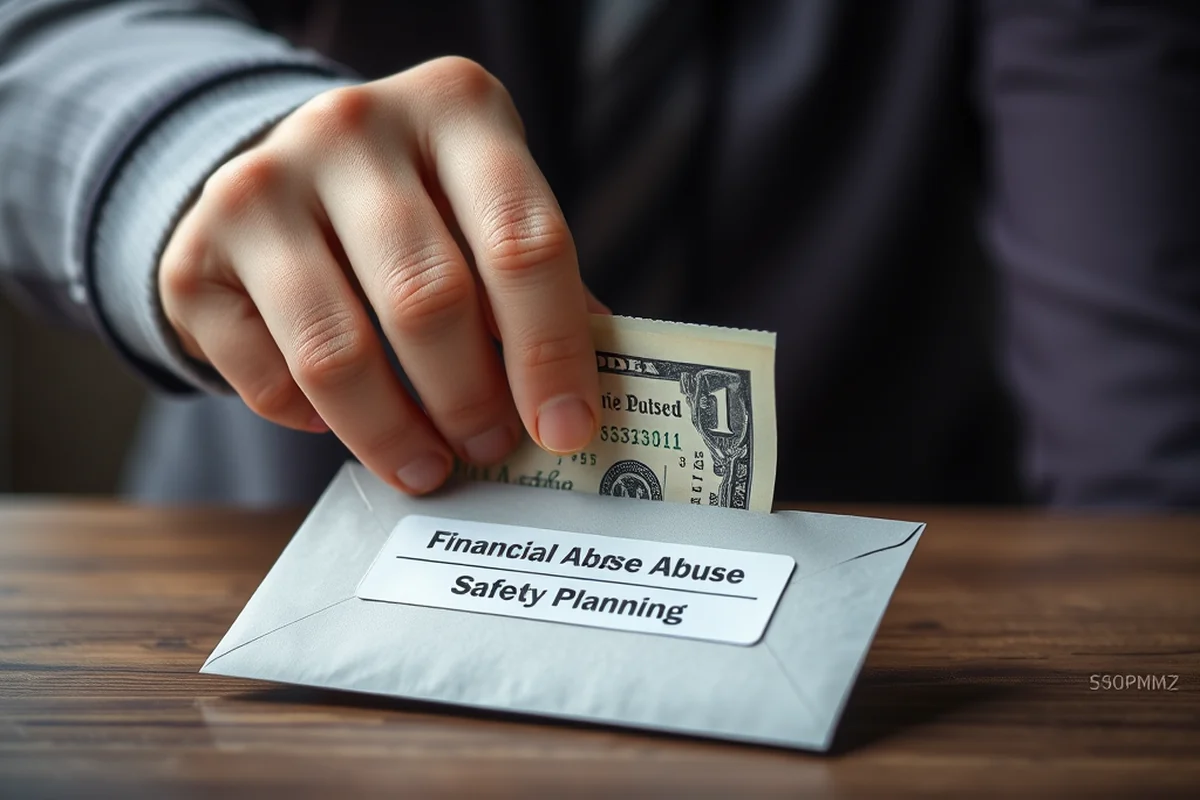
The first step in building a financial abuse safety plan is to document everything. I kept a list of all my bank accounts, credit cards, and loans, along with their numbers and balances. I also documented any financial decisions my abuser made on my behalf. This helped me later when I needed to prove that I had been manipulated.
Next, I set up a separate account with a trusted bank and transferred as much money as I could into it. I also froze my credit through the three major credit bureaus, which prevented my abuser from taking out loans in my name. These steps took time, but they made a huge difference in giving me a sense of security.
Lastly, I made sure to have a backup plan in case I needed to leave quickly. I stored copies of important documents like my birth certificate and Social Security card in a safe place. I also created a list of contacts, including lawyers, support groups, and financial advisors, who could help me if I needed to take legal action.
A safety plan is your financial lifeline — build it before you need it.
Related: Financial advisor safe credit union
Related: Financial Planning Safe Harbour Steps
Related: Financial advisor safety harbor
Related: Financial Planning Short Definition
Related: Financial Planning Low Income
Related: Financial Planning Internships Summer 2025
Related: Financial Planning Summer Internships
Related: Financial Planning Budget Template
Related: Financial Planning Summer 2026 Internships
Related: Range Financial Planning Cost
Related: Elan Financial Services
Legal Protections and Financial Tools to Use
One of the first things I did was look into legal protections, like restraining orders or protective orders, which can prevent an abuser from accessing your financial information. I also learned about the ability to change your name or Social Security number if needed, which can be a powerful tool in protecting your identity.
I found that financial institutions also have protections in place. For example, some banks allow you to set up alerts for unusual activity, and others offer services like credit freezes or credit monitoring. These tools are invaluable when you suspect your abuser might be trying to access your accounts.
I also used a service called 'Freeze My Credit' to lock down my credit reports, which made it impossible for anyone to open new accounts in my name without my permission. This was one of the most empowering steps I took in my journey to financial independence.
Credit freezes are free, easy to set up, and can prevent abusers from opening accounts in your name. Contact the three major credit bureaus to start the process.
“I remember the day I realized I had no idea how to protect my finances from abuse — it was during a conversation with a…”— Financial Planning for Accountants editors
Related: Financial Planning Internships Summer 2026 Near Me
Related: Retirement Planning Without House
Related: Is The Online Banking
Building a Support Network for Financial Safety

I realized early on that I couldn’t do this alone. I reached out to a local domestic violence shelter, where I met other survivors who were going through similar experiences. We shared tips, resources, and encouragement, which made the process feel less isolating.
I also connected with a financial advisor who specialized in helping survivors of abuse. He helped me understand how to rebuild my credit, set up a budget, and save money without being exposed to further harm. Having someone who understood my situation made a huge difference.
Another key part of building a support network was letting trusted friends and family know what was happening. I had a few people who I could rely on for help, whether it was a place to stay, a way to access money, or just someone who could listen and support me through the process.
Saving and Investing While in an Abusive Relationship
I found that saving even small amounts of money could be a powerful way to break free from financial dependence. I used a savings account that was separate from my everyday spending, and I made sure to contribute to it every month, even if it was just $50.
Investing was something I was nervous about at first, but I spoke with a financial planner who helped me understand how to start with low-risk options like index funds or retirement accounts. These investments grew over time and gave me a financial cushion that I could use later.
I also used apps that track my spending and savings, which helped me stay on top of my finances even when my abuser was trying to control them. These tools gave me a sense of control that was hard to get through other means.
After Leaving: Rebuilding Your Financial Life
After leaving, I had to deal with the aftermath of financial abuse, which included repairing my credit, rebuilding my savings, and starting over in a new place. It took time, but I used the plan I had created to help me through the process.
One of the first things I did was contact a credit counselor to help me understand my credit report and work on improving my score. I also started looking for jobs and building a new budget that gave me more control over my money.
I found that staying connected with my support network was crucial during this time. They helped me find affordable housing, apply for jobs, and access financial assistance programs that made rebuilding my life easier.
Leaving an abusive relationship is hard — but rebuilding your finances can be the start of a new chapter.
Long-Term Strategies for Financial Independence
I learned that financial abuse safety planning isn’t just about the immediate steps — it’s about building a long-term strategy for financial independence. That includes things like setting financial goals, creating a budget, and investing in the future.
I started with small goals, like paying off my credit card debt and saving a certain amount each month. I also set bigger goals, like buying a house or starting a business, which gave me something to work toward.
I also made sure to continue educating myself about personal finance, which helped me make better decisions and avoid falling into the same traps again. This knowledge was one of the most valuable things I had after leaving the abusive relationship.
💰 Tight Budget Safety Plan
A low-cost strategy that focuses on building emergency savings and freezing credit.
🚀 Aggressive Payoff Plan
A high-impact plan that focuses on rapid debt repayment and financial independence.
💼 Irregular Income Plan
A plan tailored for those with inconsistent income, helping them manage and save effectively.
💍 Couples Safety Plan
A plan designed for couples, ensuring financial transparency and shared responsibility.
📚 Beginner Safety Plan
An easy-to-follow plan for those new to financial abuse safety planning.
| The mistake | Why it happens | The fix |
|---|---|---|
| Not securing your credit immediately | This can allow your abuser to open accounts in your name, leading to debt and identity theft. | Freeze your credit as soon as you suspect abuse, and monitor your credit reports regularly. |
| Not having a separate bank account | This can leave your money vulnerable to being controlled or taken by your abuser. | Open a separate bank account and use it for all your personal expenses and savings. |
| Not documenting everything | This can make it hard to prove financial abuse later, especially if you need legal help or want to recover your money. | Keep a detailed record of all your financial transactions, accounts, and any financial decisions made by your abuser. |
| Not building a support network | This can leave you isolated and without help when you need it most. | Connect with local shelters, financial advisors, and support groups who can help you create a safety plan and provide emotional support. |
Financial Abuse Safety Planning
Common Questions
How do I start a financial abuse safety plan if I have no money?
What should I do if my abuser has my financial information?
Can I get help from a financial advisor if I’m a survivor of financial abuse?
How long does it take to rebuild my credit after financial abuse?
References
- Taking the Mystery Out of Retirement Planning (dol.gov)
- Financial Abuse Guide | Military OneSource (militaryonesource.mil)
- safety planning - Ramsey County, Minnesota (assets.ramseycountymn.gov)
Cite this guide
Financial Planning for Accountants (2026). Financial Abuse Safety Planning. https://bookwithlogic.com/financial-abuse-safety-planning/
Feel free to cite or share this guide.